It’s no secret that I have been thinking a lot about AI. This is where the action is in venture, but honestly for the whole economy. It is a big deal in 2026 and it will be in 2036, too. Below are eight theses that I shared at a recent event.
We are now entering a new cycle defined by agentic work and integration. In 2025, nearly 85% of the startups we diligenced were AI-based. As we deploy capital through 2026, we are thinking about where value will accrue next.
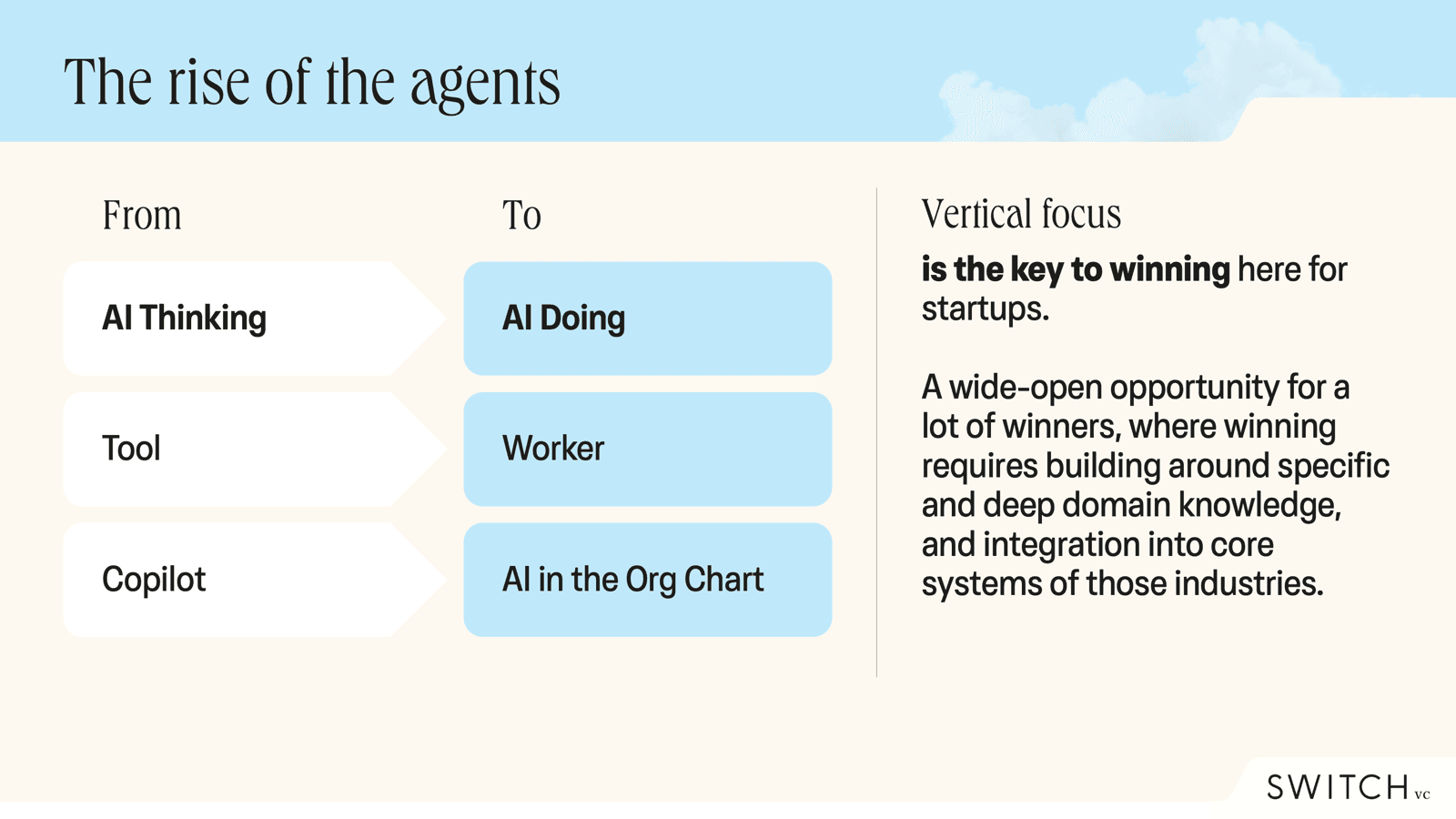
1. Agents Rising
Ditch the idea of AI as just a smart chatbot. We are entering the agentic phase, where AI handles real-world tasks like running errands and negotiating for you. Pricing models shift from subscriptions to paying for work completed.
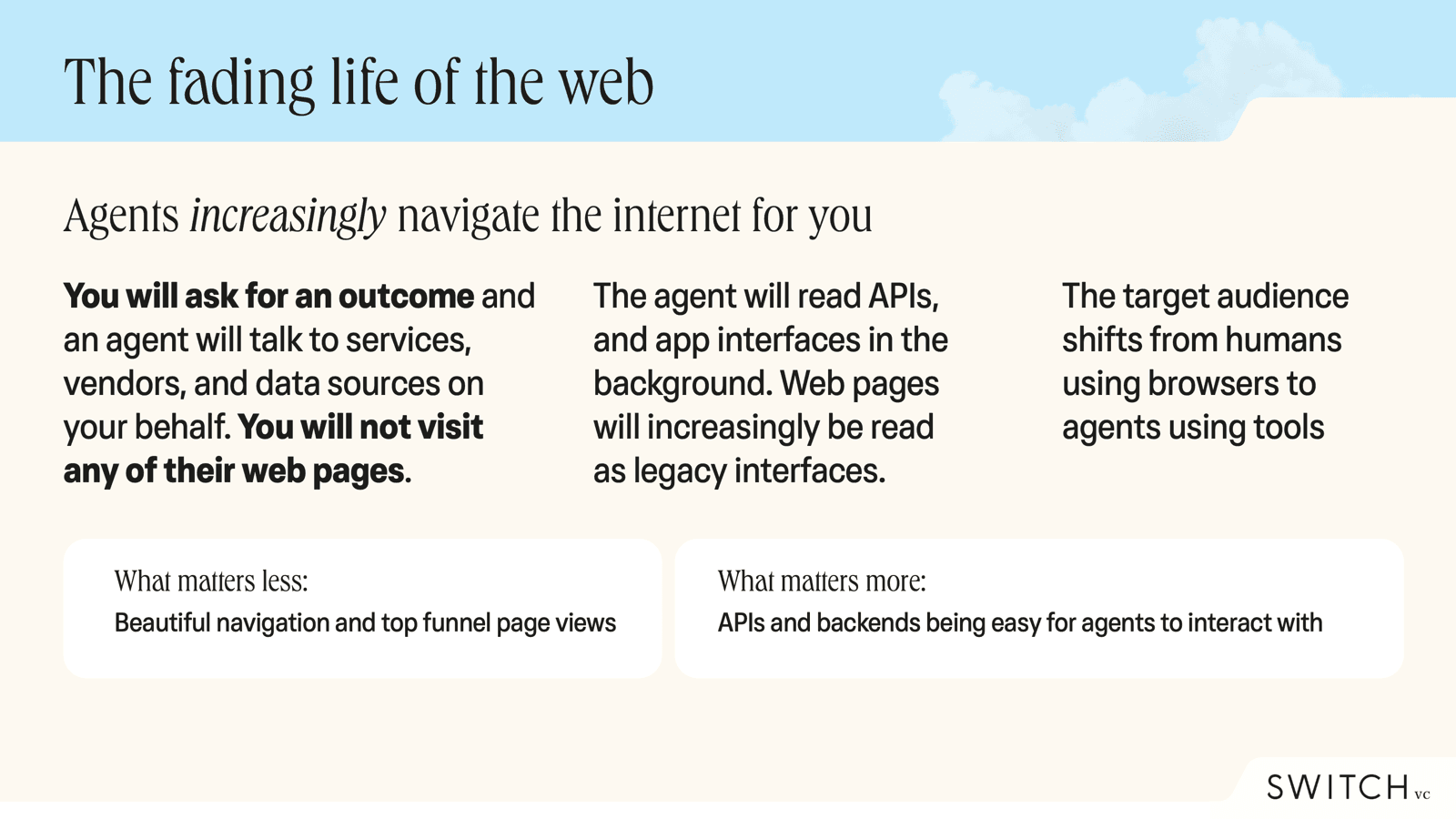
2. The Fading Web
Graphical interfaces and clicks are losing importance. AI agents will handle internet navigation via machine-to-machine communication, making the traditional "browsing" experience secondary.
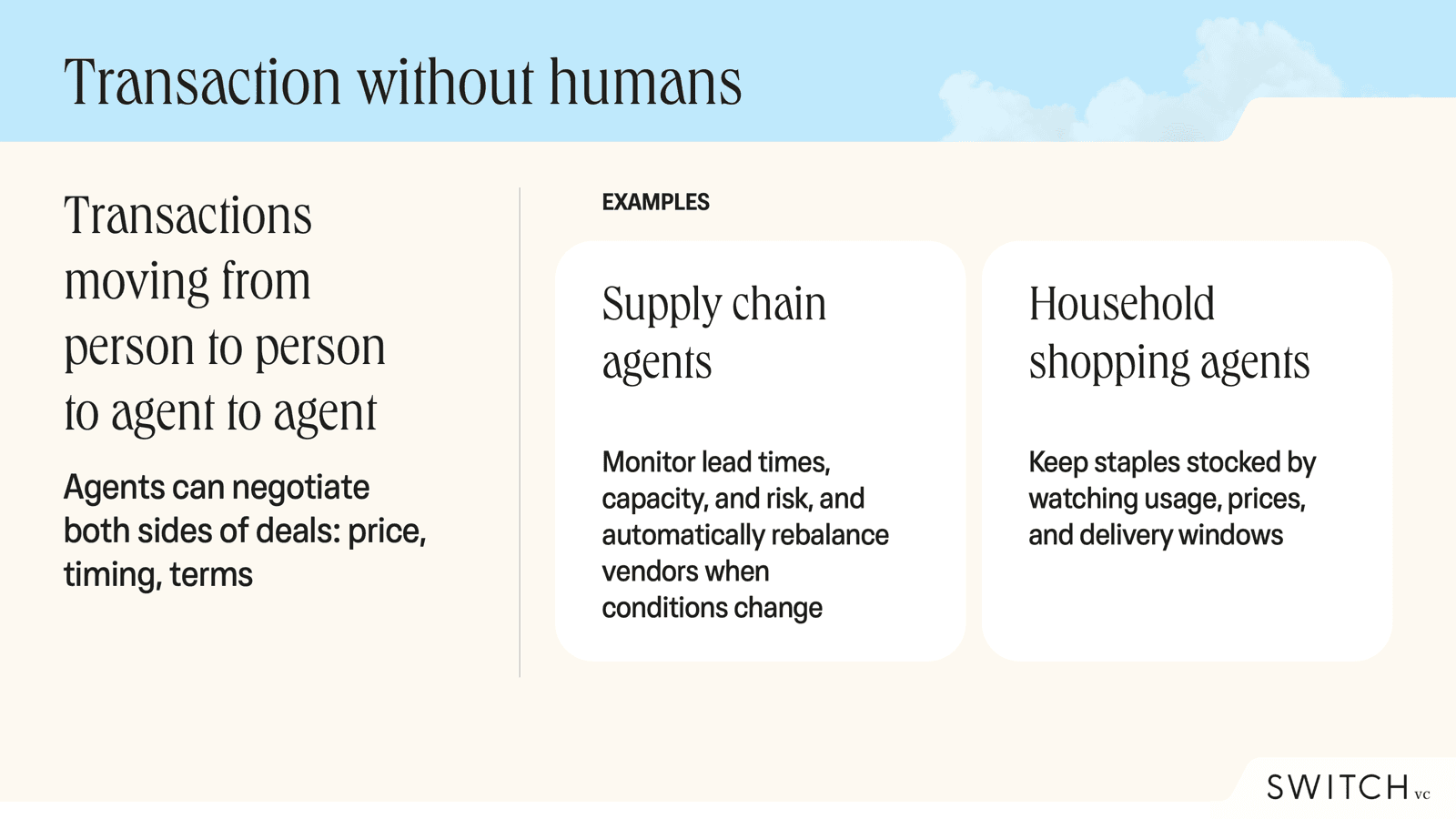
3. Transactions Without Humans
Get ready for agent-to-agent transactions. They will understand needs, plan against budgets, and set up logistics without humans getting involved in the middle of the funnel.
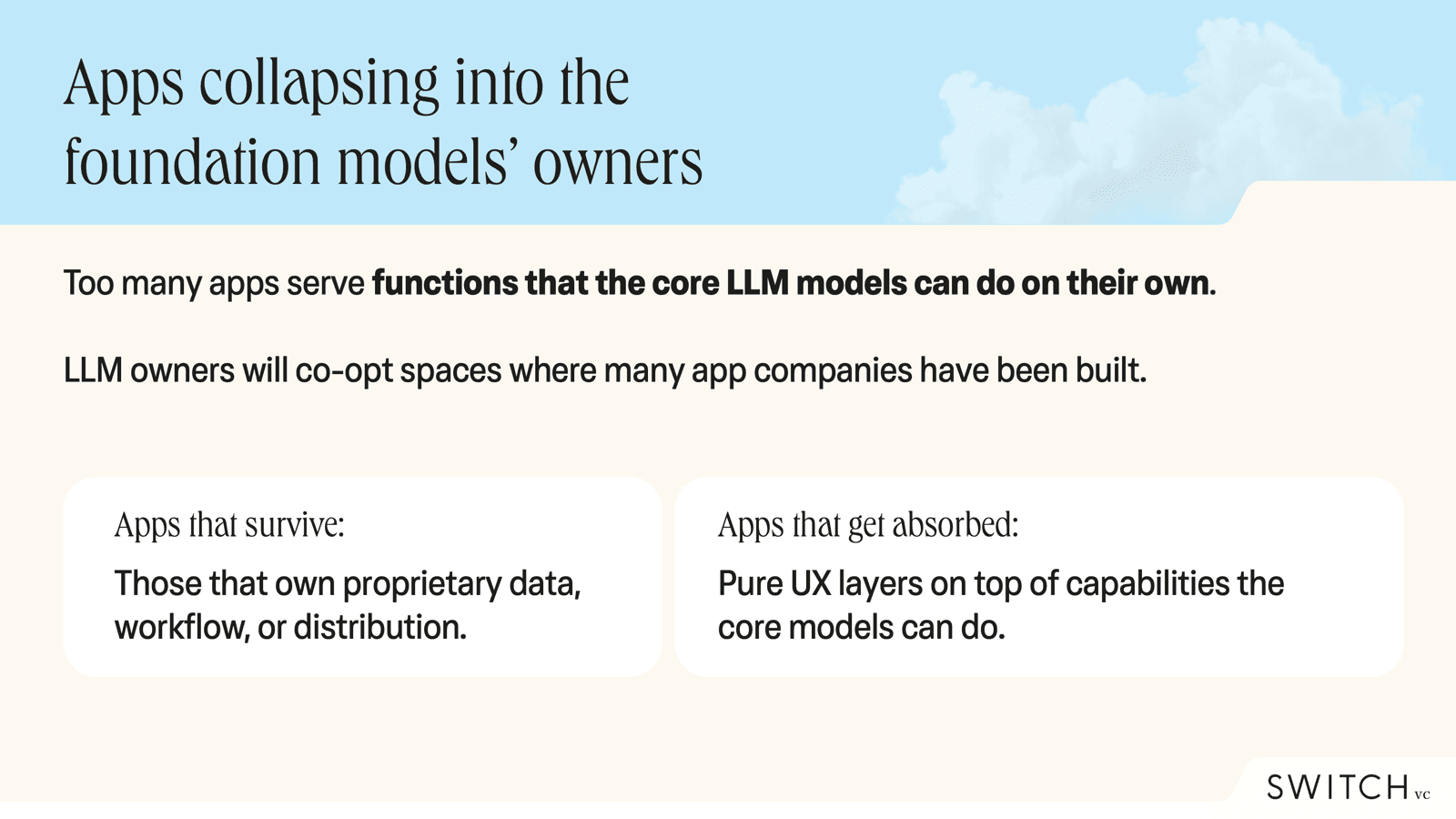
4. Apps are Being Eaten
Code is no longer a sustainable moat. Startups must own unique workflows, proprietary data, or distribution channels that foundation models cannot easily replicate.
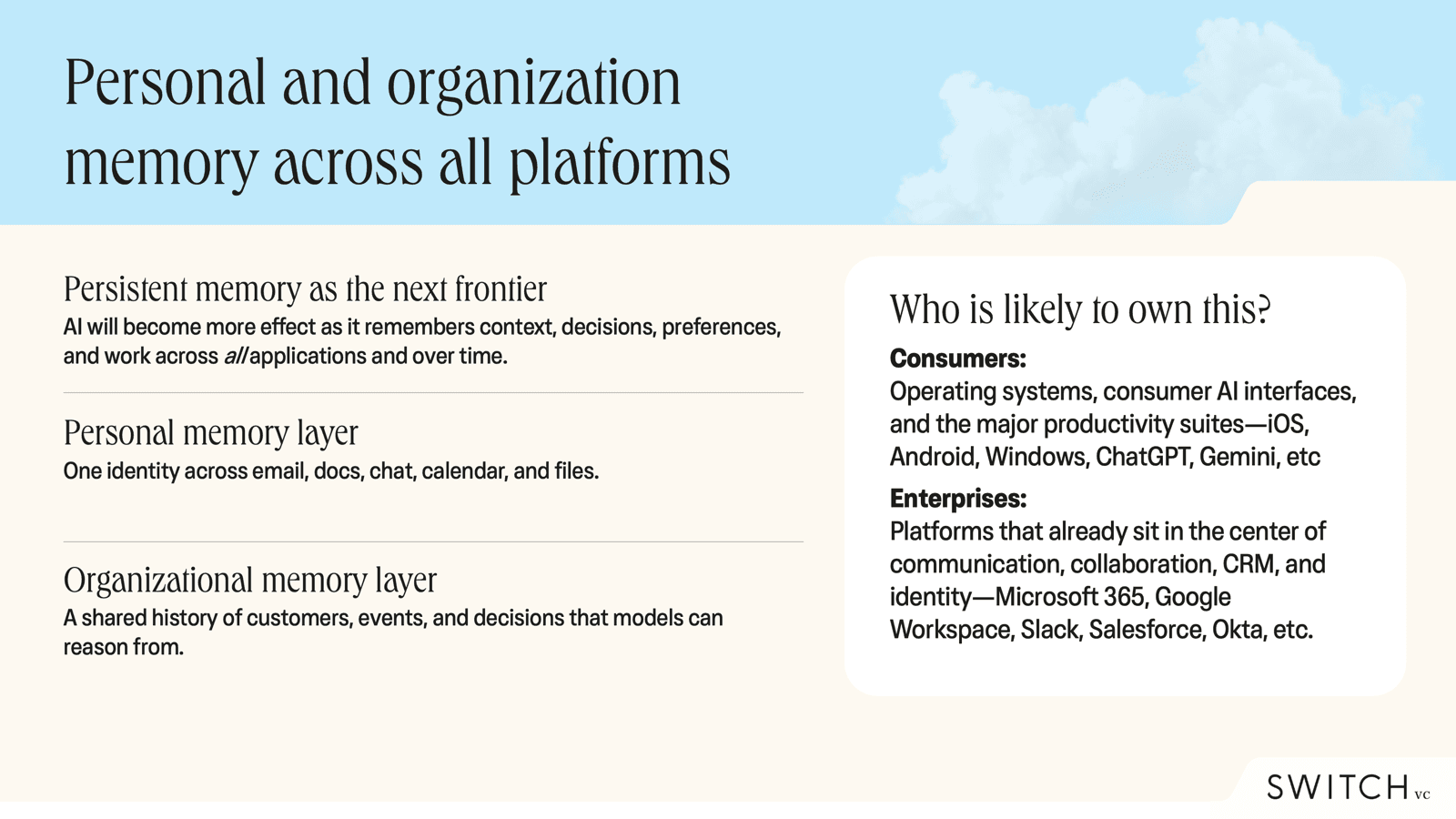
5. “Speak, Memory”
AI becomes effective when it has persistent memory across apps. This will be a record of decisions, preferences, and history that spans email, chat, and docs.
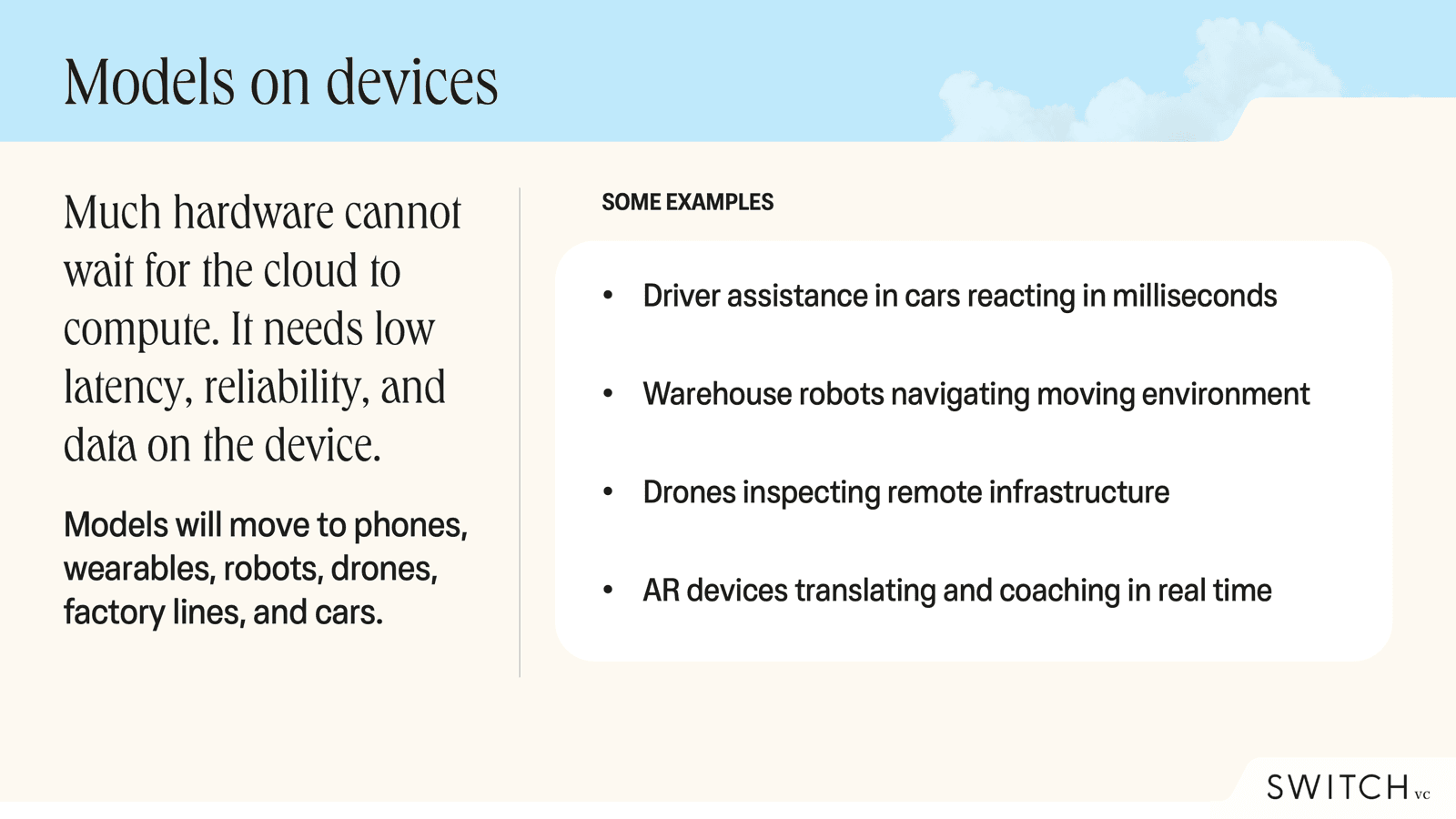
6. Models on Devices
Hardware cannot always wait for the cloud. Whether it's robotics or driver assistance, latency demands that AI run locally on the edge.
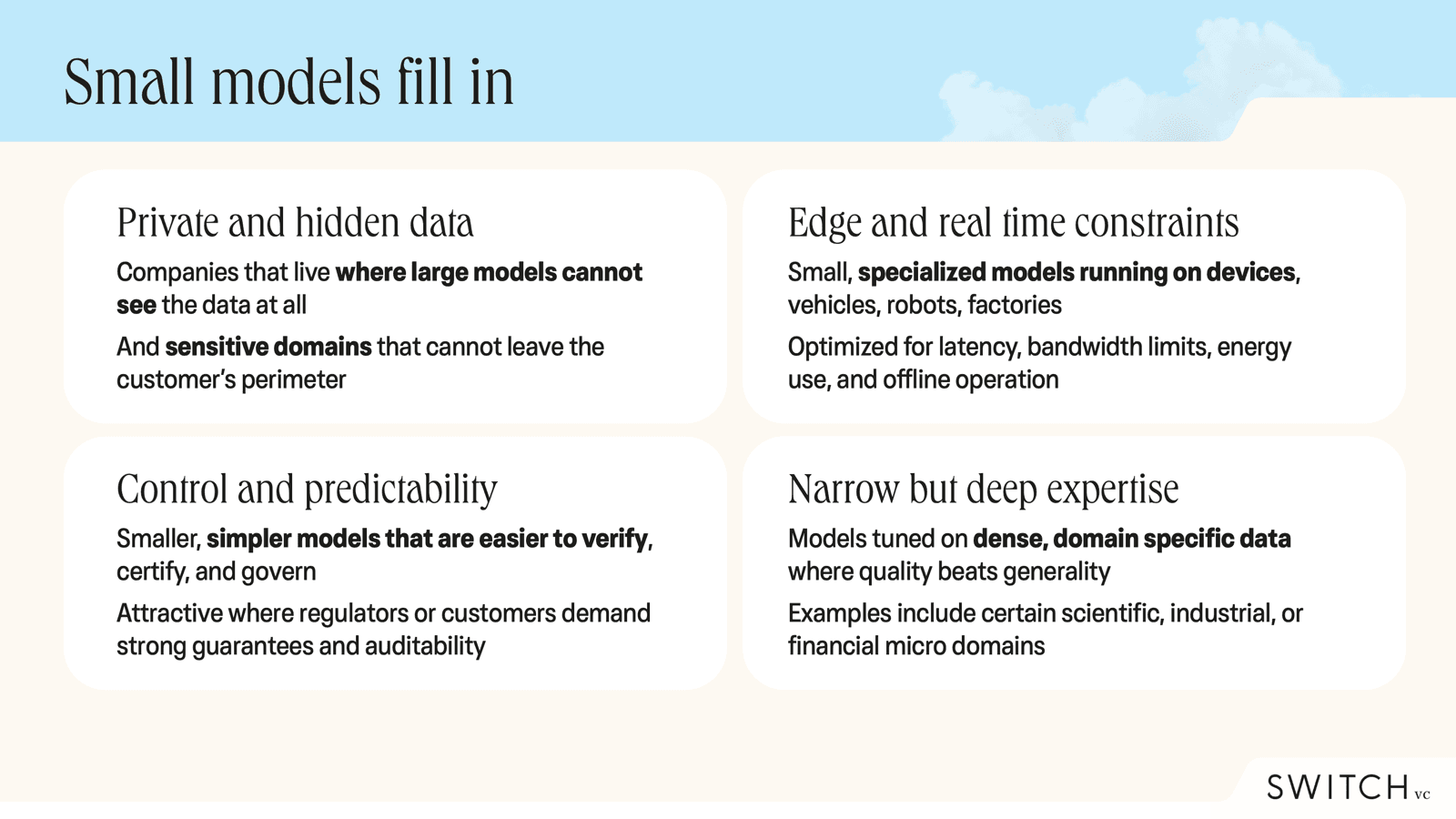
7. Small Models, Big Deal
While big players chase AGI, there is a massive opportunity for small, "narrow" models trained on proprietary data for fast, local performance.
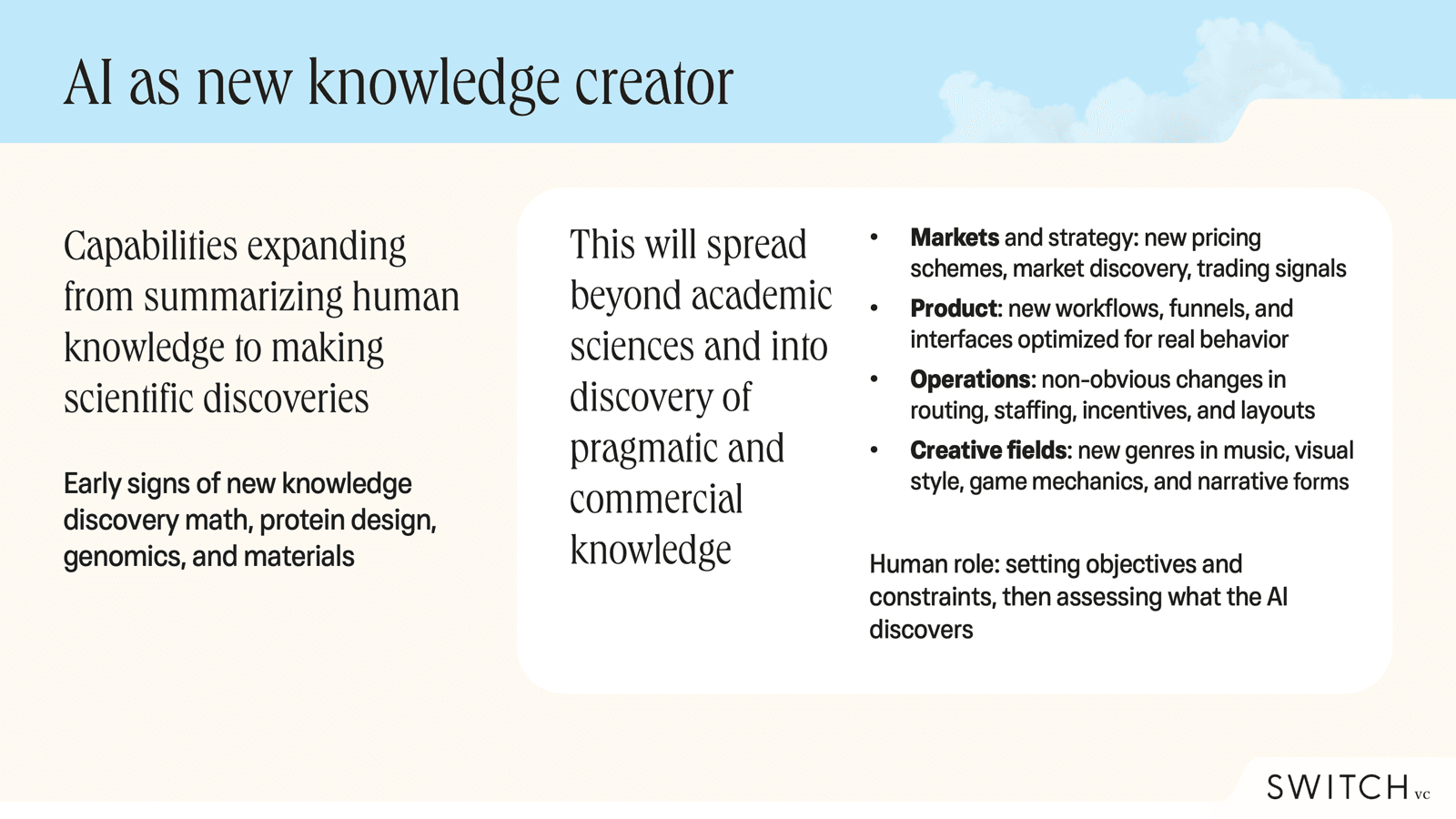
8. AI as Knowledge Creator
Soon, AI will move from summarizing existing knowledge to actively discovering new knowledge—teaching us and itself simultaneously.